
Everyone agrees that personalized experiences convert better. The data is consistent, the logic is obvious, and the tools to execute it have never been more accessible. So why do so many teams either skip personalization entirely or build something so complex it collapses under its own weight before it ever ships?
The problem isn’t intent. It’s scope. Personalization at activation is one of those areas where the ceiling is genuinely high — a well-executed approach can dramatically improve time-to-value and reduce early churn — but the path from “we should personalize this” to “this is live and working” is littered with stalled projects and over-engineered flows that nobody maintains.
After building personalization programs across different product types and team sizes, I’ve learned that the question isn’t whether to personalize activation. It’s where to start and, crucially, where to stop.
Why activation is the right moment for personalization
Personalization has value throughout the customer lifecycle, but the activation window — roughly the first 48 to 72 hours after signup — is where it pays the highest dividend.
Here’s why. At the moment of activation, a user has maximum intent and minimum context. They just signed up, which means they want to succeed with your product. But they don’t yet know the best path to get there. A personalized experience that guides them to the most relevant version of “first value” reduces the cognitive load of figuring that out themselves.
Contrast this with, say, personalizing a retention email for a customer who’s been using your product for eight months. They already know the product. Personalization helps, but the stakes are lower. At activation, the user is still deciding whether to invest their attention. Personalization at this stage isn’t just nice — it’s often the difference between staying and leaving.
The three levels of personalization at activation
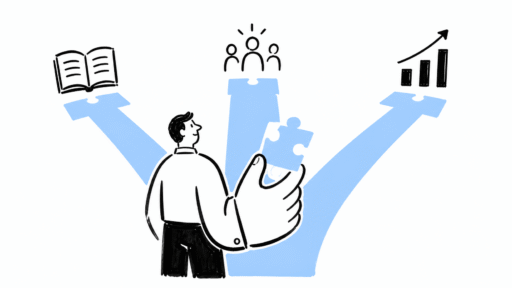
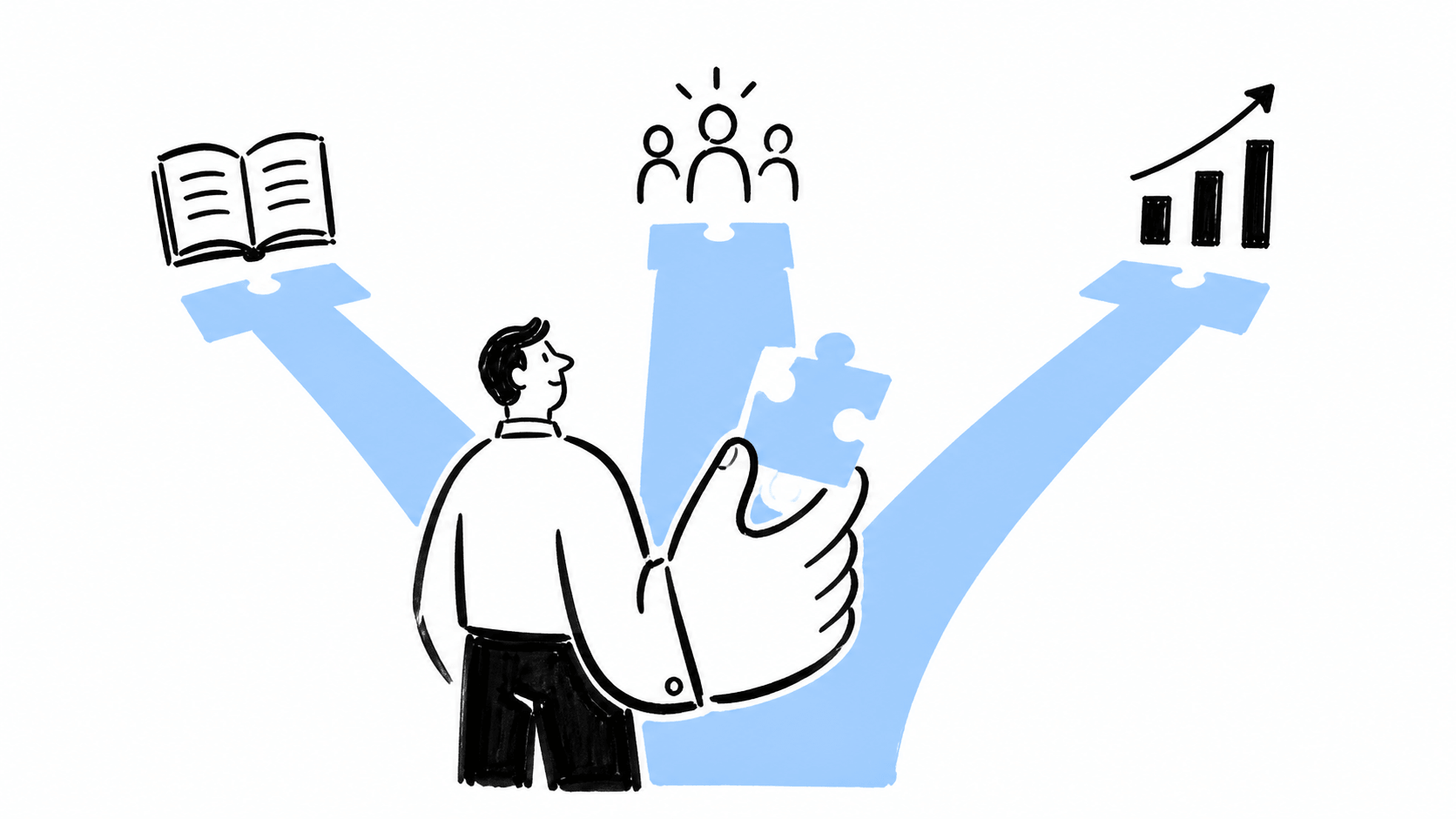
It helps to think about activation personalization as three layers of increasing sophistication. Start at level one. Get to level two when it’s working. Consider level three carefully before committing.
Level 1 — Role or use case segmentation
This is the most accessible starting point and the one with the clearest ROI. At signup, ask the user one qualifying question: What’s your primary goal? Or: How do you plan to use [product]? Two to four answers, no more.
Based on their response, route them into a tailored onboarding path. Different welcome email, different in-app tooltip sequence, different definition of “activation moment.” A project manager using your tool for team coordination has different first needs than a freelancer using it for client billing. Both can be served well by the same product — but their activation experiences should look different.
This level requires discipline more than technical complexity. Write distinct email sequences for each persona, build conditional logic in your onboarding flows, and resist the urge to make it more complicated than that.
Level 2 — Behavioral personalization
Once you have clean event tracking in place, you can start personalizing based on what users actually do — not just what they say they’ll do at signup.
A user who created three projects in their first session has different needs than a user who created one and spent the rest of their time on the settings page. The first user is engaged and ready to go deeper. The second user is struggling with something fundamental and probably needs proactive help, not another feature showcase.
Behavioral personalization means your messaging adapts to these signals in near-real-time. Email triggers that fire based on specific actions or inactions rather than a fixed time sequence. In-app prompts that surface based on what the user has and hasn’t explored. Onboarding progress that skips steps the user has already completed rather than making them sit through a flow they don’t need.
The prerequisite here is solid event tracking. If your behavioral data is incomplete or inconsistent, behavioral personalization produces unpredictable results. Don’t rush to level two until your data foundation is reliable.
Level 3 — Predictive and dynamic personalization
This is where AI-assisted tools, dynamic content engines, and predictive next-best-action recommendations live. It’s also where complexity can spiral quickly.
Level three personalization can produce genuinely impressive results when executed well — content that adapts dynamically to individual usage patterns, activation paths that optimize themselves over time, messaging that learns from aggregate behavior to serve increasingly relevant experiences.
But it requires significant data infrastructure, ongoing maintenance, and a team with the capacity to monitor and iterate. For most lifecycle teams, especially those in growth-stage companies, level three is a future state, not a starting point. The opportunity cost of building it before levels one and two are solid is high.
Where to stop
Personalization creates a specific and common trap: the more dimensions you try to personalize across simultaneously, the more scenarios you create, and the harder the whole system becomes to manage.
A simple example: if you have four user roles and three behavioral states and two subscription tiers, you potentially have 24 distinct experiences to write, test, and maintain. Add one more dimension and it doubles. Most teams underestimate how quickly this compounds — and overestimate how much content they can actually create and keep current.
Stop when you hit diminishing returns on complexity. The jump from zero personalization to basic role segmentation is significant. The jump from role segmentation to behavioral triggers is meaningful. The jump from behavioral triggers to fully dynamic AI-personalization is often marginal relative to the investment — unless you’re at scale where even small percentage improvements represent substantial revenue.
Stop when it’s blocking shipping. A personalized activation flow that takes six months to build will always be outperformed by a basic flow that ships in three weeks and gets iterated on. Personalization doesn’t need to be perfect to add value. It needs to be live.
Stop when you can’t measure it. If you can’t isolate the impact of a personalization change — because your testing setup isn’t clean, because you’re changing too many things at once, because you don’t have baseline data — you won’t learn from it. Measurement isn’t an afterthought. It’s what makes the investment worth making.
A practical starting sequence
If you’re building activation personalization from scratch, here’s the order I’d recommend:
First, identify your two or three most distinct user personas and what “activation” looks like for each of them. You may already have this from sales or support data — if not, talk to recent customers who converted well.
Second, build a single qualifying question into your signup flow and route personas into separate email sequences. Measure activation rate by persona. This alone will show you where the biggest gaps are.
Third, once your event tracking is solid, add behavioral triggers for the two highest-signal moments in your activation flow: the action that most strongly predicts conversion, and the inaction (usually after 48 hours) that most strongly predicts churn. Build interventions for both.
Then stop, measure, and iterate before adding more. The goal is always a personalization program that’s working and maintainable — not one that’s theoretically comprehensive and practically frozen.
The right frame
Personalization at activation isn’t about showing every user a completely unique experience. It’s about removing the friction between a new user and the specific version of value your product delivers for them. The more quickly and clearly you can do that, the better your conversion rate will be.
Start narrow. Ship fast. Measure carefully. Add complexity only when the data tells you it’s worth it.