


You’ve seen the popup. You’ve probably dismissed it. “Invite a friend and you’ll both get $10 off!” It appears three minutes after you sign up for something, before you’ve used the product, before you have any idea whether it’s worth recommending, and before the company has earned the right to ask.
This is what most referral programs look like: a transaction disguised as a recommendation. And it fails for the same reason cold outreach fails — nobody wants to do a favor for someone they don’t know yet.
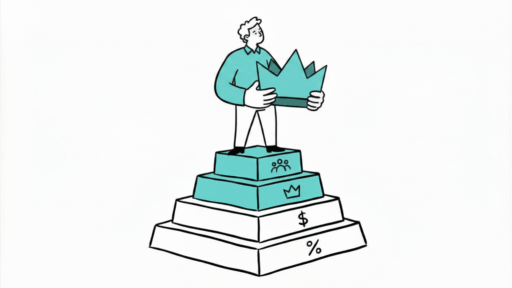
The best referral programs I’ve studied and implemented don’t feel like programs at all. They feel like natural moments where a happy customer shares something good. The mechanics are invisible. The incentive is secondary. The timing is everything.
Here’s how to build one.
Why most referral programs fail
Before building, it’s worth understanding why the default approach doesn’t work.
They ask too early. A user who signed up yesterday has nothing to recommend. They haven’t experienced value. They haven’t formed an opinion. Asking for a referral before activation is like a restaurant asking for a Yelp review before the food arrives.
They incentivize the referrer, not the act of referring. “$10 off your next purchase” rewards the referrer for completing a transaction, not for making a genuine recommendation. This attracts coupon hunters who refer indiscriminately, producing low-quality leads that churn quickly.
They feel transactional. When a referral is framed as “do this and get that,” it strips the social currency from the act. People refer products because it makes them feel helpful, knowledgeable, or generous — not because they want a discount. A transactional frame replaces intrinsic motivation with extrinsic motivation, which is almost always weaker.
They’re one-size-fits-all. The same referral prompt appears for every user regardless of their engagement level, satisfaction, or social influence. A power user who loves the product gets the same generic popup as a user who logged in twice and forgot their password.
The three ingredients of a referral that works
Every successful referral comes from the intersection of three things: a moment of delight, a reason to share, and a frictionless mechanism.
Ingredient 1: A moment of delight
People refer things immediately after a positive experience — not during a neutral one. They just had a great meal, saw impressive results, solved a frustrating problem, or received unexpectedly good service. That emotional peak is the referral window.
Your job is to identify when those peaks happen in your product and trigger the referral opportunity at that exact moment. Common peaks include achieving a milestone (first successful campaign, 100th order, a performance record), receiving a positive result (a report showing growth, a problem solved), completing a significant action (finishing a complex setup, launching something new), and getting help that exceeded expectations (a great support interaction).
Map your product’s emotional peaks. Those are your referral triggers — not a calendar date, not a login count.
Ingredient 2: A reason to share
The incentive is secondary. The primary reason people refer is social currency — the desire to be seen as helpful, informed, or discerning.
Frame the referral as an act of generosity, not a transaction. “Give your colleague a free month” is stronger than “Get a free month when a friend signs up.” The first positions the referrer as generous. The second positions them as self-interested.
Even better: give them a result to share, not just a link. “Your campaigns generated 43% more engagement this month — share your approach with a colleague” is infinitely more compelling than “Invite a friend.” The first gives them something worth talking about. The second gives them an errand.
Ingredient 3: A frictionless mechanism
Once someone decides to refer, every click between that decision and the completed referral is a drop-off point. The mechanism needs to be invisible.
One click to generate a personalized link or message. Pre-written copy they can edit (not a rigid template). Multiple sharing channels — email, WhatsApp, LinkedIn, direct link copy. No registration or form for the referred person beyond the absolute minimum.
The fastest referral path I’ve seen: the referrer taps “Share,” a pre-written message with their personal link is generated, they send it via their preferred channel, and the referred person clicks the link and lands directly in the signup flow with the referral credit already applied. Three steps total, zero friction.
The timing framework
Here’s when to introduce referral moments across the lifecycle, ordered by effectiveness.
After a measurable win (highest conversion). The user just achieved something concrete — their first successful outcome, a personal record, a completed project. The referral prompt is embedded in the celebration: “You just [achieved X] — know someone who’d benefit from this too?”
After a positive support interaction. The user had a problem, your team solved it well, and they’re feeling grateful. A subtle referral prompt in the support follow-up email converts surprisingly well because the user is in a state of positive surprise.
At natural sharing moments. Some products generate outputs that are inherently shareable — reports, dashboards, creative assets, results. Build referral mechanics into the sharing flow itself. When someone shares a report, include a small “Powered by [Product]” badge with a referral link. Not intrusive. Just present.
At renewal or upgrade. A customer who just renewed or upgraded has voted with their wallet. They’ve decided to stay. A referral prompt at this moment is natural: “You just renewed — is there a team or colleague who’d benefit too?”
Never in the first week. I’ll say it once more for emphasis: never ask for a referral during onboarding. The user hasn’t earned the right to recommend you, and you haven’t earned the right to ask. Early referral prompts damage both conversion and perception.
Designing the incentive (or not)
The counterintuitive truth is that the best referral programs often work without any financial incentive at all. The incentive helps volume, but the absence of one improves quality.
If you do offer an incentive, follow these principles.
Reward both sides equally. A referral that only rewards the sender feels extractive. One that rewards both parties feels like a gift exchange.
Use product value, not discounts. Extended trials, premium features, increased limits — these reward people with more of what they already like, reinforcing product engagement. Cash discounts incentivize the transaction, not the relationship.
Don’t make the incentive the headline. “Help a colleague get started” is the headline. “You’ll both get an extra month free” is the secondary detail. If the incentive is the primary message, you’ll attract referrals motivated by the reward rather than the recommendation.
Consider removing the incentive entirely for power users. Your most engaged users refer because they genuinely believe in the product. Adding a financial incentive can actually reduce their motivation by making a generous act feel transactional. Test this with your top segment — you might be surprised.
Measuring referral health
Track these metrics to evaluate your referral program beyond just “number of referrals.”
Referral-to-activation rate. What percentage of referred users actually activate? If this number is below your overall activation rate, the referral program is attracting low-quality leads — probably because the incentive is too prominent.
Referred user retention vs average. Referred users should retain better than average (because they arrive with a personal recommendation). If they don’t, something in the referral flow is setting wrong expectations.
Time from signup to first referral. How long does it take your average referrer to make their first referral? This tells you when the referral impulse naturally occurs and helps you time your prompts.
Referral concentration. Are referrals coming from a broad base of users or from a small group of super-referrers? Both can work, but they require different strategies. A broad base means your referral moments are well-placed. A small group means you should invest in nurturing those ambassadors.
Organic vs prompted split. What percentage of referrals happen without any prompt from you? High organic referral rates indicate strong product-market fit. If you’re only getting prompted referrals, the program is working but the product isn’t generating natural word of mouth yet.
The bottom line
A referral program isn’t a feature you bolt onto your product. It’s a reflection of how much value your customers actually experience. If users aren’t referring, the problem usually isn’t the mechanism — it’s that you haven’t created enough moments of genuine delight.
Fix the experience first. Make the product worth talking about. Then make talking about it effortless.
Everything else is just coupons with extra steps.