
Most loyalty programmes are expensive discount mechanisms wearing a programme’s clothes. You earn points by spending money. You redeem those points for money off. The customer gets a slightly better deal. The brand gets slightly thinner margins and a customer who now expects a discount every time they buy.
This is the loyalty trap: a programme designed to drive repeat purchases that actually devalues the relationship with every transaction.
The alternative isn’t complicated, but it requires rethinking what a loyalty programme is actually for. The best programmes don’t reward spending. They reward belonging — and they create a sense of status and community that makes switching to a competitor feel like a genuine loss, not just an inconvenience.
I’ve seen both versions of this up close. At Nike in Colombia, loyalty wasn’t a points-and-discounts system — it was built into the fabric of how the brand interacted with its best customers. Early access to product launches, exclusive events, recognition in-store and online. The currency wasn’t money off. It was access, identity, and belonging. Customers didn’t stay with Nike because it was cheaper. They stayed because leaving meant giving up something that felt like part of who they were.
That experience has shaped everything I think about loyalty programme design since.
Why most tier programmes underdeliver
Kevin Kelly’s famous 1,000 True Fans essay captures the underlying truth: “A creator, such as an artist, musician, photographer, craftsperson, performer, animator, designer, videomaker, or author — in other words, anyone producing works of art — needs to acquire only 1,000 True Fans to make a living.”
He’s writing about creators, but the principle extends directly to brands and loyalty programmes. You don’t need every customer to be intensely loyal. You need a meaningful segment of customers who feel a genuine connection — who buy not because of price, but because of belonging.
Most tier programmes fail to build this because they focus entirely on transactional loyalty (spend more, get more) rather than emotional loyalty (feel more connected, get exclusive experiences). Transactional loyalty is real but fragile — it holds as long as no competitor offers a better deal. Emotional loyalty is stickier and significantly more valuable over time.
The three most common mistakes in tier programme design:
Rewarding spend instead of engagement. When the only way to rise through tiers is to spend more money, you’re telling customers that their value to you is purely financial. Customers who feel seen only for their wallet are easy to lure away by a competitor with a bigger wallet incentive.
Making tier benefits feel like coupons. If every benefit in your programme is a discount, your best customers come to expect constant discounting. You’ve trained them to devalue your product’s full-price offering.
Creating tiers that don’t feel meaningfully different. If the gap between Bronze and Silver is a slightly larger discount percentage, nobody aspires to be Silver. The tiers need to represent genuinely different experiences — different levels of access, recognition, and community.
Designing a tier programme that works
Start with the behaviour you want to reward
Before you name a tier or set a threshold, define the behaviours that your best customers exhibit — the ones that drive long-term value and that you want more of.
In most businesses, these include: purchase frequency (not just value), product category breadth (customers who buy across multiple categories are more loyal), engagement with your content or community, and referral behaviour.
The insight at Nike wasn’t that loyal customers spent the most — it was that they were engaged across multiple touchpoints. They came to events. They engaged with content. They recommended products to friends. They were part of the brand culture, not just buyers of the product.
Design your tier criteria to reward this kind of multi-dimensional engagement, not just transaction volume.
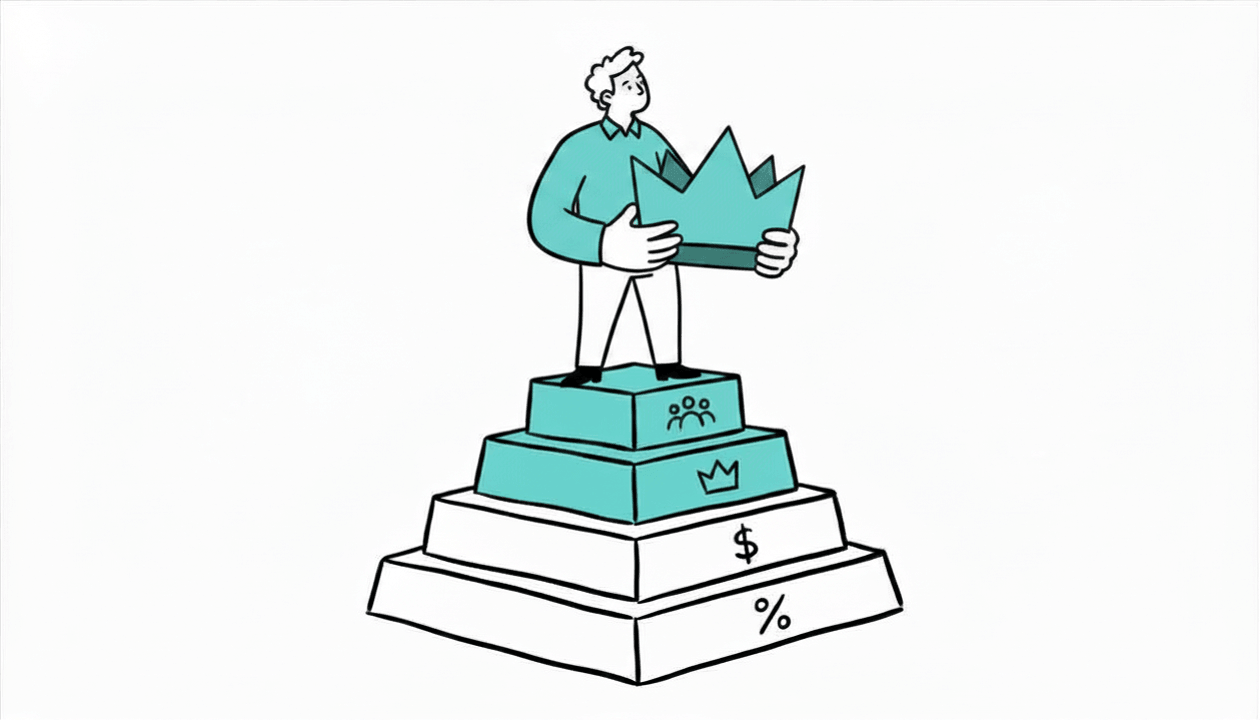
Build your benefits pyramid around access, not discounts
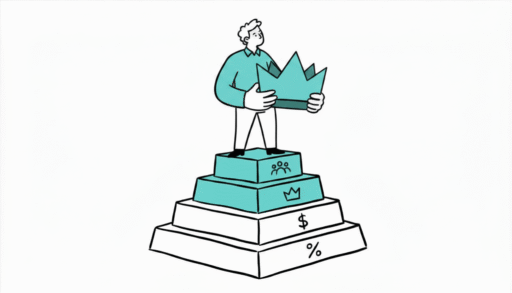
Think of loyalty programme benefits in three categories, listed in order of brand impact:
Experiences and access are the most valuable and least brand-diluting benefits you can offer. Early access to new products. Exclusive events (in-person or digital). Behind-the-scenes content. Direct access to your team or experts. These benefits feel scarce and special — they can’t be replicated by a competitor simply offering a bigger discount.
Recognition costs almost nothing and creates significant emotional connection. A dedicated loyalty label on their account. Personalised communication that acknowledges their tenure and history with you. Public acknowledgment in your community. These signals say “we see you specifically, not just your purchase history.”
Practical rewards — discounts, free shipping, priority support — belong in the programme, but they should be the baseline, not the headline. If someone in your top tier is there primarily for the 15% discount, you haven’t built loyalty. You’ve built a discount dependency.
“Loyal customers, they don’t just come back, they don’t simply recommend you, they insist that their friends do business with you.” — Chip Bell, customer loyalty author
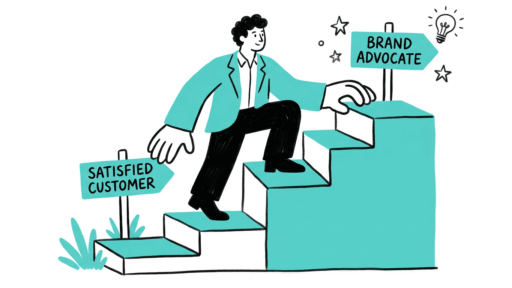
The goal is the last part of that quote. A customer insisting their friends use your brand is only possible when they feel genuinely connected to it — when the relationship goes beyond the transaction.
Define tier thresholds that drive aspiration, not frustration
Tier thresholds need to feel achievable for the right customers and aspirational for those who aren’t there yet. If reaching the top tier requires a level of spending only 0.5% of your customer base achieves, the programme creates exclusivity but not aspiration. If it’s reachable for 60% of customers, the tiers don’t mean anything.
A useful benchmark: aim for roughly 15–25% of active customers in your top tier. Enough that the status feels meaningful to a real segment, few enough that it retains genuine exclusivity.
Use a 12-month rolling window for tier qualification rather than calendar-year resets. Rolling windows feel fairer to customers and create a more consistent distribution of customers across tiers throughout the year.
Think carefully about downgrade mechanics
Tier downgrades are the most dangerous moment in a loyalty programme. A customer who drops from Gold to Silver doesn’t just lose a benefit — they experience a status loss, which research in behavioural economics consistently shows is more psychologically painful than an equivalent gain is pleasurable.
Handle downgrades with grace. Give plenty of advance notice (30–60 days). Frame it as an opportunity to re-qualify, not a punishment. Consider a grace period for recently-lapsed customers. In some cases, offering a downgrade to a middle tier rather than all the way to the entry level preserves enough status to keep the customer engaged.
“People will forget what you said, people will forget what you did, but people will never forget how you made them feel.”
— Maya Angelou
A poorly handled downgrade creates a lasting negative impression. A well-handled one can actually strengthen the relationship by demonstrating that you handle difficult moments with care.
Connecting your tier programme to your lifecycle stack
A loyalty programme that lives in isolation from your CRM and lifecycle communications is running at a fraction of its potential. Your tier data should flow into your segmentation, your email personalisation, your product experience, and your customer success outreach.
Practically, this means:
- Tier status in every communication. When you email a Gold-tier customer, they should know they’re a Gold-tier customer. That recognition reinforces the relationship every time you contact them.
- Tier-specific lifecycle journeys. A top-tier customer approaching renewal should have a different retention sequence than a new customer. They’ve earned a different conversation.
- Predictive tier intervention. If your data shows that a top-tier customer’s engagement has dropped significantly, treat it as a high-priority churn signal and intervene early — before they lose their status and before you lose them.
At Lodgify, where I worked on lifecycle programmes for property managers, we found that customers who felt recognised and seen — through personalised communication that acknowledged their history with the product — had meaningfully higher retention rates than customers who received standard lifecycle flows, even when the underlying product experience was identical.
The test of a good loyalty programme
Here’s the simplest way to evaluate whether your loyalty programme is working: ask your top-tier customers why they stay.
If the answers cluster around “the discounts” or “the free shipping,” you have a transactional programme dressed up as a loyalty programme. If the answers include “I feel like they know me,” “I love being the first to know about new things,” or “I recommend this brand to everyone” — you’ve built something durable.
The best loyalty programmes make customers feel like insiders. That feeling is what you’re designing for, and it’s what no competitor can simply outbid.