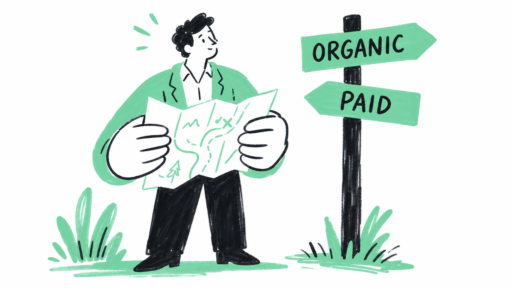
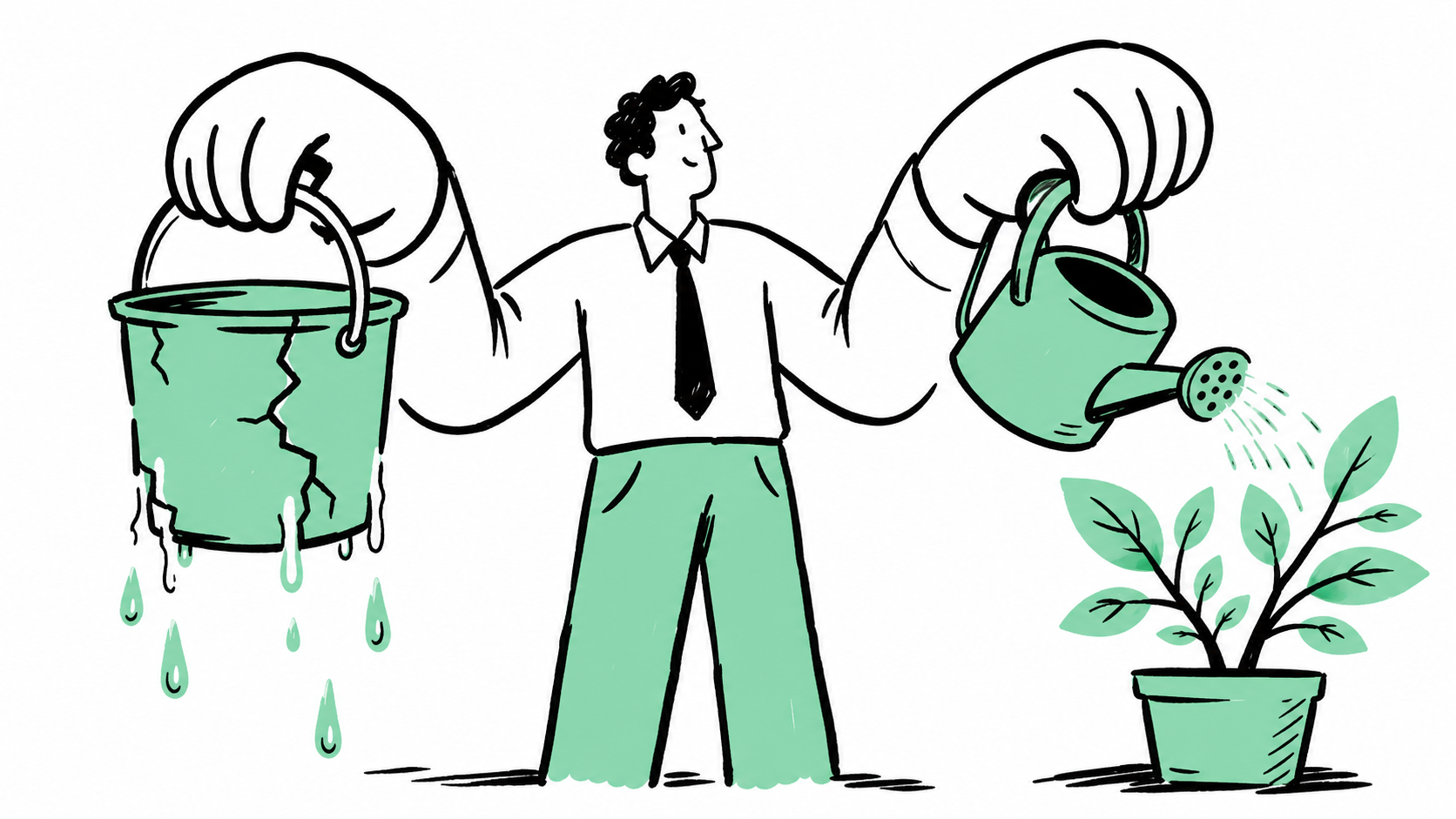

The organic vs paid debate is one of the oldest arguments in marketing. Paid is fast but expensive. Organic is slow but sustainable. Everyone has an opinion, and most of those opinions are based on the wrong metrics.
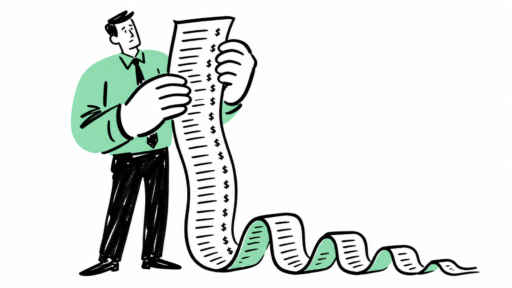
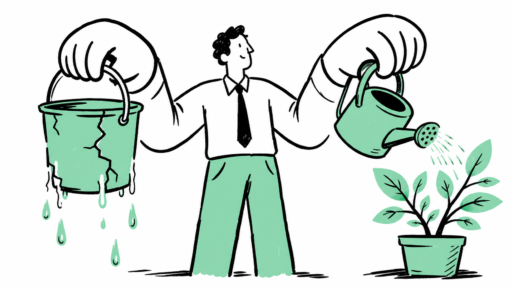
Here’s the problem: almost every comparison between organic and paid acquisition is based on top-of-funnel metrics — cost per click, cost per lead, cost per acquisition. These numbers tell you how efficiently you’re filling the bucket. They tell you nothing about the size of the hole at the bottom.
When you measure channels through a lifecycle lens — retention, activation, and lifetime value — the organic vs paid equation looks completely different. And the budget decisions that follow are often the opposite of what traditional analysis would suggest.
The hidden lifecycle cost of paid acquisition
Paid acquisition has a well-known cost: the media spend. What it also has is a hidden cost that rarely appears in campaign reports — a higher churn rate.
This isn’t a universal rule, but it’s a pattern I’ve seen consistently across different businesses. Users acquired through paid channels, especially interruption-based channels like social ads and display, tend to have lower activation rates, steeper early churn curves, and lower lifetime value than users acquired through organic channels.
The reason is intent. A user who clicks a paid ad was interrupted during something else. Their decision to sign up was often impulsive — driven by a compelling creative, a discount, or a moment of curiosity. That’s a valid entry point, but it creates a fragile first impression. The moment friction appears — a complicated setup, a learning curve, a missing feature — the impulse evaporates and the user leaves.
Compare this to a user who found you through a search query. They had a problem, actively looked for a solution, read your content, evaluated alternatives, and chose you. By the time they sign up, they’ve already committed mentally. The activation friction that kills the paid user is just a speed bump for the organic user.
This doesn’t mean paid is bad. It means paid is more expensive than your CPA suggests — and the true cost only becomes visible when you track what happens after the click.
The organic advantage nobody talks about
Organic acquisition through content and SEO has an obvious weakness: it’s slow. Building content, earning rankings, and growing traffic takes months or years. But it has three lifecycle advantages that compound over time.
Pre-education. By the time an organic user signs up, they’ve already consumed your content. They understand your approach, your language, and your perspective. This means they arrive with context that paid users don’t have — context that reduces onboarding friction and accelerates activation.
Self-qualification. Organic traffic self-selects. A user who reads three articles about customer retention and then signs up for your CRM tool is highly qualified. They’ve proven interest, demonstrated patience, and chosen you based on substance, not a promotion. This is a dramatically different user profile than someone who clicked “Get 50% off.”
Trust foundation. Content-acquired users already trust you. Not blindly — but enough to give you the benefit of the doubt during onboarding. When your product has a rough edge, they’re more likely to work through it because they’ve already invested time in your content. Paid users have no such trust bank. The first rough edge might be their last interaction.
These three advantages — pre-education, self-qualification, and trust — don’t show up in any acquisition dashboard. But they show up dramatically in your retention curves.
Where paid wins (and it does win)
I’m not here to argue that organic is always better. Paid acquisition has genuine advantages that lifecycle-aware marketers should leverage.
Speed to market. When you’re launching a new product, entering a new market, or testing a hypothesis, paid gives you data in days instead of months. You can’t build a content engine fast enough to validate a new segment.
Audience precision. Paid channels let you reach specific demographics, behaviors, and interests with surgical precision. Organic brings whoever finds you. If your product serves a narrow audience, paid targeting may be the only way to reach them efficiently.
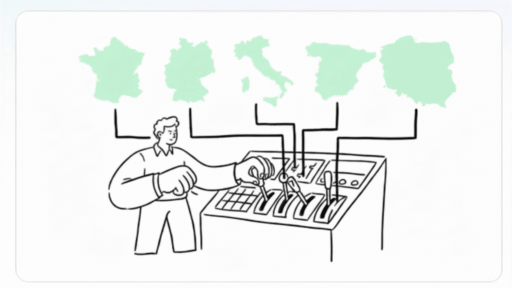
Scale control. You can turn paid up or down instantly. Organic traffic grows (and occasionally declines) on its own schedule. When you need predictable pipeline for a sales team or a board meeting, paid delivers controllable volume.
Retargeting. Users who visited your site but didn’t convert can be brought back through paid retargeting — a lifecycle-aware use of paid that bridges the gap between first visit and signup. This is one of the highest-ROI uses of paid budget because you’re reaching people who’ve already shown intent.
The lifecycle-smart approach isn’t to choose between organic and paid. It’s to assign each channel the role it’s best suited for — and to measure both by the same full-lifecycle metrics.
Rethinking your channel mix with lifecycle data
Here’s a practical exercise you can do this quarter to rebalance your channel mix using lifecycle data.
Step 1: Segment your retention curves by channel. Pull your 30-day and 90-day retention data and break it down by first-touch acquisition source. You’ll almost certainly see meaningful differences between channels. Document the gap.
Step 2: Calculate true cost per retained user. For each channel, divide total spend by the number of users who are still active at 90 days. This is a more honest number than CPA because it accounts for both acquisition cost and early churn. A channel with a 10 euro CPA and 80% churn has a 50 euro cost per retained user. A channel with a 30 euro CPA and 20% churn has a 37.50 euro cost per retained user. The “expensive” channel is actually cheaper.
Step 3: Map content topics to retention. If you’re running organic content, go deeper. Which content topics or formats produce the highest-retaining users? Comparison articles? How-to guides? Case studies? Industry reports? This data tells you not just that organic works, but which kind of organic works best.
Step 4: Redesign paid for retention, not just conversion. Once you know which user profiles retain best, adjust your paid targeting to reach those profiles — even if it raises your CPA. Target by intent signals (search ads for problem-aware queries) rather than by demographics alone. Test creatives that set accurate expectations rather than ones that maximize clicks.
Step 5: Build bridges between channels. The highest-value strategy often combines paid and organic: use paid to drive traffic to high-quality content (not landing pages), let the content pre-educate and qualify, then convert users who’ve consumed the content. This gives you the speed of paid with the retention quality of organic.
The long-term math
Here’s the uncomfortable math that changes budget allocation.
If you’re spending 70% of your acquisition budget on paid and 30% on organic (a common split), but your organic users retain at twice the rate and have 1.5 times the lifetime value, you’re systematically under-investing in your best-performing channel.
I’m not suggesting you flip the ratio overnight. Organic takes time to build, and you need volume while you build it. But a gradual shift — reallocating 5-10% of paid budget toward content creation each quarter — typically pays for itself within 6-9 months as the organic engine starts compounding.
The math is even more dramatic when you factor in organic’s compounding nature. A paid campaign stops generating users the moment you stop spending. A well-ranked piece of content generates users for years with near-zero marginal cost. Over a two-year horizon, the organic investment almost always outperforms — but only if you measure the full lifecycle, not just the first click.
The real question
The organic vs paid debate is a distraction. The real question is: which of your acquisition strategies produces customers who stay, engage, and grow?
Answer that question honestly — with retention data, not campaign data — and the channel mix decisions make themselves.